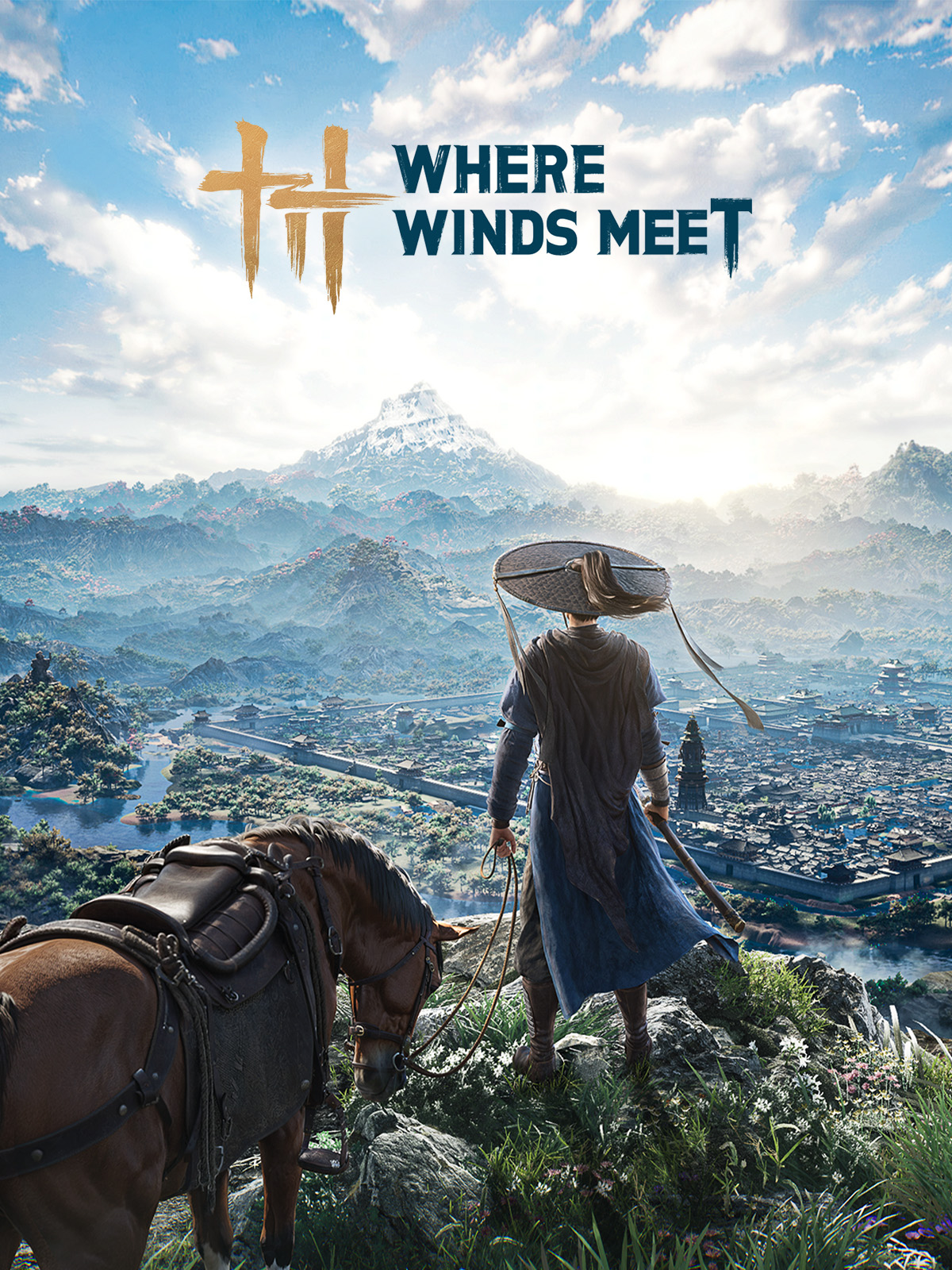
Where Winds Meet
Where Winds Meet: A Blade in the Dark, A Song in the Chaos
The winds have finally shifted. After years of anticipation, cryptic trailers, and a feverish hype cycle in the East, Where Winds Meet (Chinese: 燕云十六声) has officially landed on global shores for PC and PlayStation 5 as of November 14, 2025. With the mobile version slated for imminent release on December 12, the martial arts world is buzzing. But does this ambitious Wuxia open-world RPG live up to the promise of being the “next generation” of Eastern storytelling?
The answer is a resounding, complex yes. But not for the reasons you might expect.
While the industry chases the next Elden Ring or Genshin Impact, Where Winds Meet carves a solitary path—much like the wandering swordsmen it idolizes. It is a game that refuses to choose between being a cinematic single-player narrative and a chaotic MMO sandbox. Instead, it daringly decides to be both, yet keeps them masterfully distinct.
The Era of “Ten Kingdoms”: A Canvas of Beautiful Decay
To understand Where Winds Meet, you must first understand its setting. We are not in the glorious Tang Dynasty or the stable Ming. We are in the Five Dynasties and Ten Kingdoms period (10th Century China)—an era of blood, fragmentation, and “might makes right.”
The developers at Everstone Studio have eschewed high fantasy for “historical maximalism.” The world is not filled with dragons and fireballs, but with the grit of a society on the brink of collapse. The lighting is moody, the villages are scarred by war, and the opulent palaces feel like gilded cages.
Walking through the streets of Kaifeng or the desolated wildlands, you feel the weight of history. The game’s “Messiah Engine” renders wet cobblestones, swaying bamboo forests, and the dynamic weather with a fidelity that rivals Ghost of Tsushima, but with a distinct, darker Chinese aesthetic. It is a world where poetry is written in blood, and every NPC seems to be struggling with the uncertainty of tomorrow.
The Art of the Blade: Combat and Acupuncture
The combat system is where the “Wuxia” fantasy truly comes alive. Unlike Western RPGs that often focus on weight and impact, Where Winds Meet focuses on flow and precision.
You are a swordsman, yes, but you are also a master of internal energy (Qi). The combat is fast, fluid, and dance-like. You can run up walls, walk on water, and deflect arrows with a flick of your wrist. But the standout mechanic that has players raving is the Acupuncture System.
In a move that feels ripped straight from a classic Shaw Brothers movie, you can use acupuncture points to disable enemies. A precise strike can immobilize a guard, silence a scout, or even cause an opponent to laugh uncontrollably, leaving them open to a finishing blow. This isn’t just a gimmick; it’s a tactical layer that rewards knowledge of human anatomy over button mashing. It turns combat into a puzzle: Do I kill him, or do I disable his arm so he drops his shield?
The weapon variety—from the elegant Jian (straight sword) to the heavy Spear and the exotic Umbrella—offers different “stances” and playstyles. The dual-weapon system allows for on-the-fly switching, letting you chain a heavy spear guard-break into a rapid sword flurry.
The Great Divide: The “Hero” vs. The “Wanderer”
Here lies the unique perspective that sets Where Winds Meet apart from its competitors.
For decades, games have struggled with the “MMO Duality.” The story tells you that you are the Chosen One, the only hero who can save the world. Yet, as soon as you step out of a cutscene, you see fifty other “Chosen Ones” bunny-hopping around the quest giver. It breaks immersion instantly.
Where Winds Meet solves this by effectively shipping two games in one package.
- ** The Single-Player “Hero” Mode:** This is a solitary, narrative-driven experience. You play as the protagonist with a defined backstory (though you shape the outcome). The world is yours alone. You make choices that permanently alter the state of your world. If you burn down a village in the story, it stays burnt. It is an immersive, high-budget action adventure comparable to The Witcher 3.
- The Multiplayer “Wanderer” Mode: With a toggle, you enter the shared world. Here, you are not the “Chosen One”; you are a “Wanderer” in the Jianghu (the martial arts community). This mode focuses on social interaction, guild wars, and cooperative exploration. You can open a teahouse, become a bodyguard for other players, or engage in massive 30v30 territory battles.
This separation is brilliant. It allows the story to be intimate and impactful without the dissonance of other players, while simultaneously offering a robust, social MMO experience for those who crave it. It respects the player’s mood: Do you want to be the hero of a movie, or a citizen of a living world?
A World That Doesn’t revolve Around You
In the multiplayer “Jianghu,” the game leans into simulation elements that are surprisingly deep. The “Profession” system goes beyond the standard Blacksmith or Alchemist.
You can become an Orator, using the power of speech to buff allies or debuff enemies (literally talking them to death). You can become an Architect, building elaborate structures in the open world that other players can visit. You can even become a Ferryman, physically transporting other players across rivers for coin.
The most talked-about feature in the recent launch week has been the “Mind Rot” mechanics (a localization of the game’s obsession/Qi deviation system). If your character engages in too many “evil” deeds or fails to meditate, they can succumb to inner demons, affecting their stats and even hallucinating enemies that aren’t there. It adds a psychological layer to the role-playing that forces you to care for your character’s mental state as much as their health bar.
The Mobile Horizon: December 12 and Cross-Play
With the PC and PS5 versions stabilizing after a few initial server hiccups, all eyes are now on the December 12 Mobile launch.
Everstone Studio has promised full Cross-Play and Cross-Progression. This means you can play the high-fidelity narrative campaign on your PS5 at home, and then log in on your phone during your commute to manage your teahouse or gather resources in the multiplayer world.
Tech analysts are skeptical about how such a graphically intensive game will run on mobile, but early beta reports from China suggest a “cloud-native” approach for older devices and a highly scalable engine for flagship phones. If they pull this off, Where Winds Meet could become the first true “AAA Wuxia Metaverse” that bridges the gap between the hardcore console gamer and the casual mobile socialite.
Verdict: A Bold Step Forward
Where Winds Meet is not perfect. The UI can be overwhelming, a common trait in Eastern RPGs, and the sheer number of systems—from acupuncture to architecture—can lead to “tutorial fatigue” in the first few hours.
However, its ambition is undeniable. It captures the soul of Wuxia—the freedom to roam, the beauty of melancholy, and the lethality of a single sword strike. By daring to split the single-player and multiplayer identities, it offers a solution to a genre stagnating in repetitive formulas.
For those tired of the same old fantasy tropes, Where Winds Meet offers a blade that cuts different. It invites you not just to play a game, but to inhabit a history that never was, in a world where the wind carries the whispers of a thousand legends.
Score: 9/10 - A genre-defying masterpiece that successfully marries narrative intimacy with social scale.
Key Takeaways for New Players (Global Launch Guide):
- Don’t Rush the Story: The single-player narrative is the heart of the game. Treat it like a premium console game.
- Experiment with Weapons: Don’t stick to just the sword. The Spear offers incredible crowd control for multiplayer events.
- Use the Environment: In combat, you can kick tables, throw jars, and use the terrain. Wuxia is about improvisation.
- Join a Guild (Alliance): Even if you prefer solo play, the passive benefits of an alliance in the “Wanderer” mode are essential for resource gathering.
The winds have met. Will you answer the call?