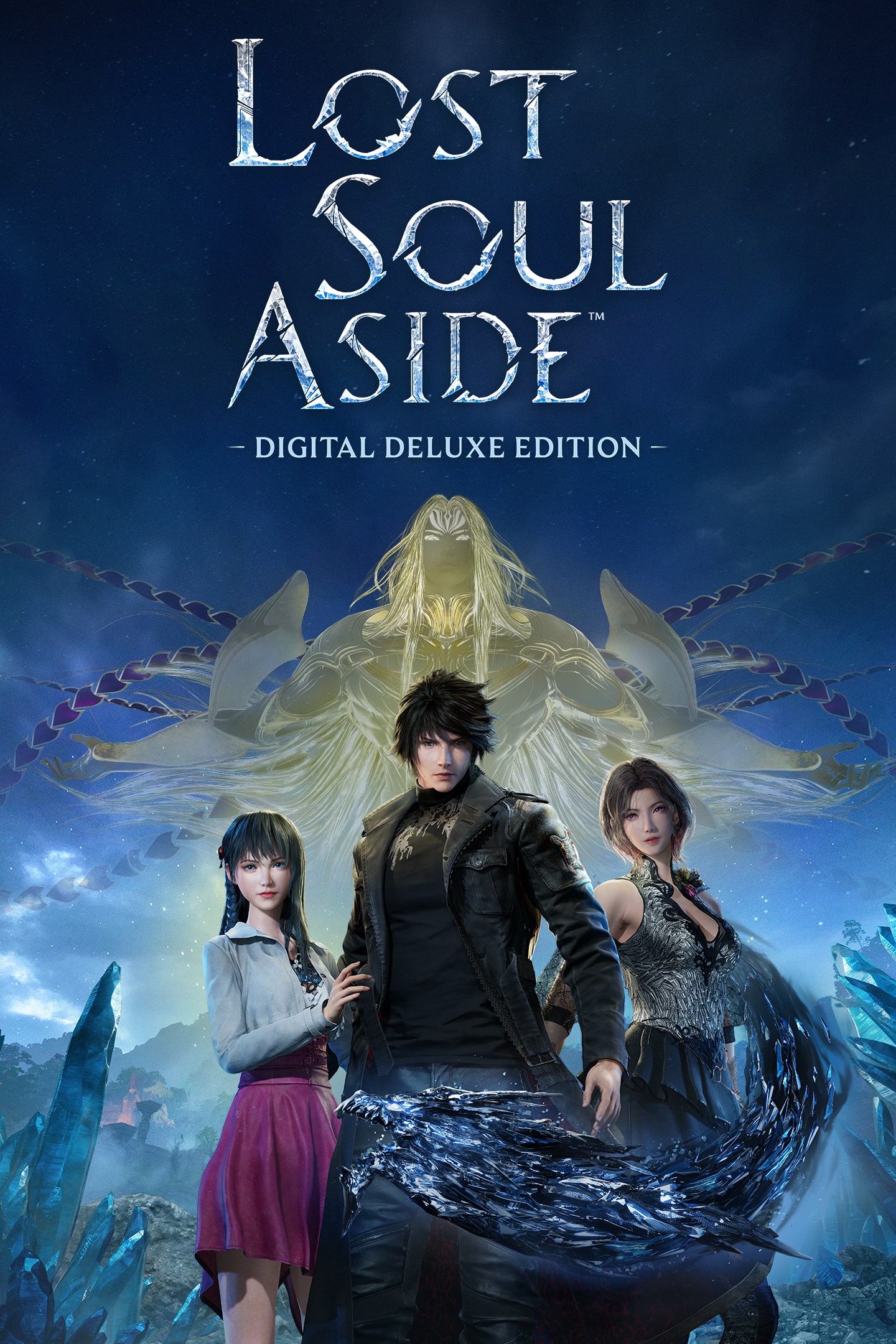
Lost Soul Aside
The Crystalline Dream: Why Lost Soul Aside Is the True Heir to the Action RPG Throne
In the fast-paced world of video game development, silence is often mistaken for stagnation. However, occasionally, silence is the sound of a blade being sharpened to a microscopic edge.
For nearly a decade, Lost Soul Aside has existed as something of a digital urban legend. It began as a viral sensation—a “one-man army” demo created by developer Yang Bing in 2016 that looked too good to be true—and has since evolved into the crown jewel of Sony’s China Hero Project. With the recent global explosion of Chinese high-fidelity gaming (ushered in by Black Myth: Wukong), the spotlight has violently swung back to Lost Soul Aside.
But this is not just another hack-and-slash title. It is a testament to the intersection of relentless artistic vision and next-generation technology. As we edge closer to its highly anticipated release, we dive deep into why this game is poised to redefine the “Stylish Action” genre.
The Genesis: A Solo Developer’s Rebellion
To understand the soul of this game, one must understand its origin. In 2016, Yang Bing, inspired by the trailer for Final Fantasy XV, decided not to wait for the game he wanted to play—he decided to build it himself. The initial trailer he uploaded to YouTube wasn’t just impressive; it was shocking. It displayed visual fidelity and combat fluidity that entire AAA studios struggle to achieve, yet it was coded by a single person in Korea.
Fast forward to today, and Yang Bing’s “UltiZero Games” has grown from a solo desk into a robust studio of over 40 developers, backed by the publishing might of Sony Interactive Entertainment.
What makes Lost Soul Aside unique in 2024-2025 is its narrative of “Maturation.” Unlike many projects that suffer from feature creep and die in development hell, Lost Soul Aside has visibly matured. The latest gameplay showcases from ChinaJoy and GDC don’t just look like the 2016 demo with better textures; they look like a realized world where mechanics, lore, and technology have coalesced into a seamless whole. It is no longer an imitation of its inspirations; it has become their rival.
The Dance of Symbiosis: Kazer and Arena
At the heart of Lost Soul Aside is a mechanic that separates it from genre titans like Devil May Cry or Bayonetta: the symbiotic relationship between the protagonist, Kazer, and the crystal dragon-entity, Arena.
In most action games, weapons are tools—static objects swapped out via a menu. In Lost Soul Aside, your weapon is a living character. Arena is a shapeshifter, a floating entity that hovers over Kazer’s shoulder, bantering with him while simultaneously morphing into whatever the combat situation demands.
The “Liquid Combat” System
The gameplay philosophy here can best be described as “Liquid Combat.” Recent footage reveals that Arena can transform instantaneously into a heavy broadsword for shield-breaking, dual blades for crowd control, a spear for range, or even magical wings for traversal.
This fluidity removes the friction of “switching stances.” Instead of a mechanical input, the combat feels like a conversation between Kazer and Arena. The “shards” or crystals that emanate from attacks aren’t just visual noise; they are part of the resource economy. The more stylishly you fight, the more you feed the symbiosis, allowing for devastating “Execution” moves that blend sci-fi particle effects with brutal melee impacts.
The movement system also deserves special mention. While Black Myth: Wukong focuses on grounded, rhythmic combat, Lost Soul Aside takes to the skies. It features an “infinite dash” mechanic (similar to the concept of “blink” in fantasy lore) that allows Kazer to skate across the battlefield, leaving afterimages of blue light. This suggests a gameplay loop that rewards aggression and mobility over defensive turtling.
A Visual Identity: Where Sci-Fi Meets High Fantasy
The art direction of Lost Soul Aside has often been compared to Final Fantasy, but a closer look reveals a more distinct “Magical Cyberpunk” aesthetic.
The world of the game is ravaged by a war involving “sculpted” monsters and crystalline infections. The environments we’ve seen—from floating celestial temples to neon-lit, rain-slicked futuristic highways—suggest a world where magic is the primary energy source for advanced technology.
The RTX Evolution
Technologically, UltiZero Games has partnered closely with NVIDIA. The game is confirmed to support Ray Tracing and DLSS 3 at launch. This is crucial for a game that relies so heavily on particle effects. The “crystalline” theme of the game means that surfaces are constantly reflecting and refracting light.
In the latest builds, the lighting isn’t just atmospheric; it’s informative. Enemy attacks telegraph through shifting light patterns in their crystal armor. The sheer density of particles—sparks, shards, blood, and magic—creates a visual cacophony that manages to remain readable, a feat that requires immense technical optimization. This commitment to visual fidelity ensures that Lost Soul Aside will be a showcase title for the PlayStation 5 and high-end PCs.
The “Second Wave” of Chinese Gaming
For years, the global gaming narrative focused on the West and Japan. Then came the “First Wave” of Chinese gacha games (Genshin Impact), followed by the “AAA Breaker” (Black Myth: Wukong). Lost Soul Aside represents the vital “Second Wave”: The Stylized Action Era.
While Wukong is rooted in history and mythology, Lost Soul Aside is rooted in global pop culture aesthetics. It proves that Chinese developers can create original IPs that don’t rely on existing literature (like Journey to the West) but can instead build entirely new universes that appeal to fans of Japanese character action games and Western sci-fi alike.
This positioning is unique. It occupies a space that Square Enix has arguably drifted away from with recent Final Fantasy entries (which have moved toward heavier, grounded combat) and that Capcom releases only sporadically. Lost Soul Aside fills the hunger for “anime-realism” action—spiky hair, giant swords, emotional melodrama, and impossibly cool choreography.
The Mystery of the Narrative
Surprisingly little is known about the actual plot, which works in the game’s favor. We know Kazer is a “splicer”—someone merged with a monster (Arena). In this universe, such beings are usually hunted as abominations.
The narrative hook seems to revolve around the question: Who is the real monster? Is it the beasts roaming the wilderness, or the church-like organization hunting Kazer? The banter between Kazer (stoic, reluctant) and Arena (arrogant, bloodthirsty) promises a “Buddy Cop” dynamic similar to Venom and Eddie Brock, but wrapped in a high-fantasy melodrama.
Recent trailers hint at a tragic backstory involving a lost war and a mysterious female figure who may be the catalyst for the world’s corruption. This emotional core is essential; without it, the game would just be a tech demo. If UltiZero Games can land the story beats, they will elevate the game from a “fun brawler” to a “memorable epic.”
Why The Delay Was A Good Thing
Skeptics have pointed to the long development cycle (2016 to present) as a red flag. However, looking at the trajectory of the industry, this delay may have saved the game.
Had Lost Soul Aside released in 2019 or 2020, it would have been an indie curiosa—a “AA” game with potential but jank. By waiting, securing Sony’s funding, and upgrading to Unreal Engine 4 (and potentially elements of 5), the team has polished the “game feel” to rival Capcom’s best. The animations have weight; the UI is sleek and modern; the voice acting (in English, Japanese, and Chinese) sounds professional.
In an era where AAA games are frequently released unfinished, Lost Soul Aside’s “when it’s done” approach is a breath of fresh air. It signals confidence.
Conclusion: The Storm Is Coming
Lost Soul Aside is more than just a game; it is a symbol of persistence. It represents the dream of every gamer who ever looked at a screen and thought, “I could make this better.” Yang Bing actually did it.
As we approach the release window, the anticipation is palpable. The game promises to deliver the speed of Devil May Cry, the visual grandeur of Final Fantasy, and the fresh, hungry ambition of a new studio out to prove itself on the world stage.
For fans of action games, the waiting is almost over. The crystals are glowing, the dragon is awake, and the sword is drawn. Lost Soul Aside is ready to step out of the shadows and claim its soul.